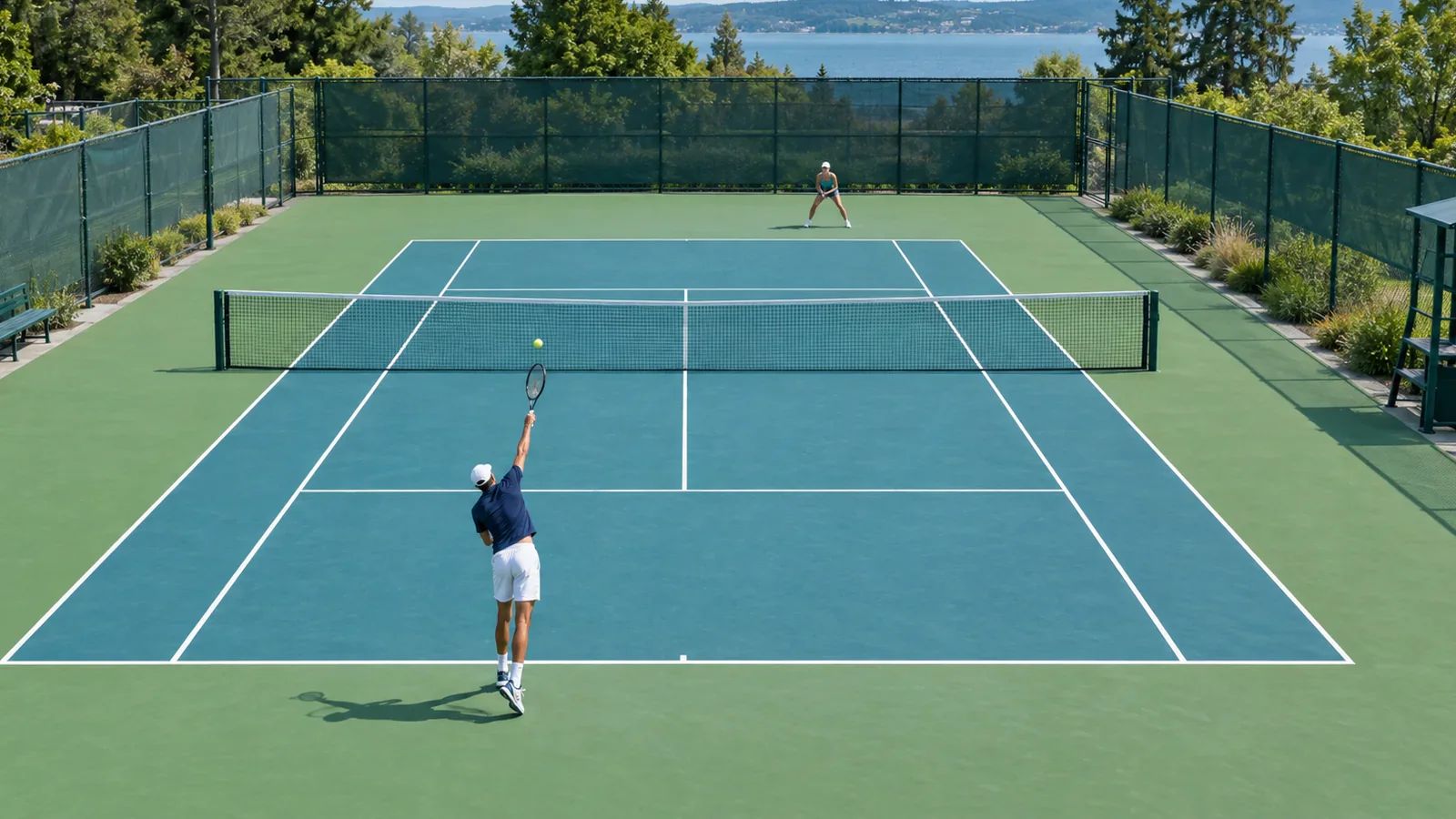
A high player can have a large range and a comfortable contact point at the service. However, this does not mean that everyone moves the same or has the same shortcomings. During the heating and first gems check how the rival reacts to the short balls, change direction and play at the body. Only on this basis choose tactics.
Toughened Laminated Game
If the opponent has difficulty changing direction, play once broad, once in the middle. It is not enough to send each ball far from him: observe if after changing direction he really delays to hit. Your goal is to develop a weaker response, and not running the rival itself.
Mix speed and height.
Repeated balls of the same length can make it easier for the opponent to set up to a strong hit. Try to change the depth, direction and height of the coward. Low slays can be useful if the opponent unwantedly falls down to the ball; short will check how it responds to the move forward. Don't assume that these games work only because the opponent is high. Leave them in the plan if they actually bring a shorter or less accurate answer.
Beware of service and return.
A high contact point can help with the service, so it’s not always worth trying the end returns. Set the rocket earlier and shorten the attack to increase the chance of playing the ball. You can choose the direction of the service to set the rival; the service on the body is a way to limit his place, but watch if it works in a given match.
In exchange, don't direct each ball straight to the opponent. Play in that place if the opponent has a problem with the balls on the body or just there he sets himself to hit. When playing at the grid check whether it's easier to pass the opponent or play in his side. Do not choose a solution only based on growth.
Do not rush to finish the point.
If the opponent has a strong service and ends well short balls, patiently ⁇ ining the exchange can be a better plan than a risky shot. Work on depth and force him to play from different positions. When a comfortable ball appears, go to attack. Record after the match which situations have made him the most difficult; then they will be a better tracklist than the growth of the opponent itself.