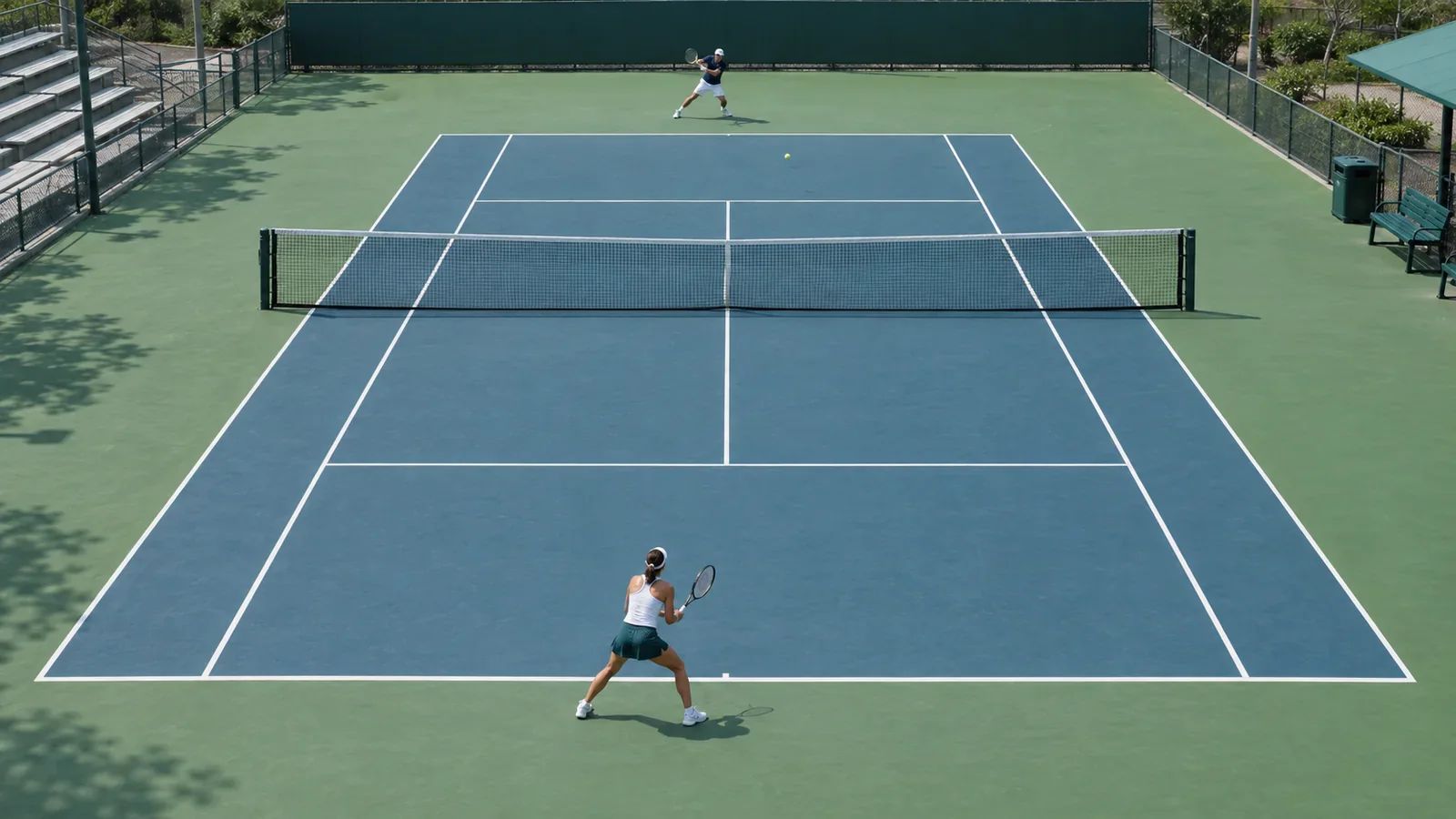
Against a player who strikes strongly, it’s easy to fall into the shots exchange. If such a game is not your asset, you don’t have to accept it. Look for a way to throw the rival out of his rhythm and force him to play the ball from a less comfortable position.
Don’t try to hit stronger every time.
If you play a ball with the same strength, length and height, the opponent can easily enter his favorite rhythm. This does not mean that you have to play exclusively defensive. Choose a stronger hit when you have good position on them, and in other situations change the pace and keep the ball in the cart.
Change length and direction.
Don’t give the rival the same ball all. Play once deeper, once shorter, change directions and height of the cow. Slays or short can take a very striking player a comfortable rhythm, especially if you see that he has to move forward then. It’s not about using every variation at once, it’s just about observing which balls the rival responds worst.
Use the entire width of the card, but don't risk the line at each hit. Force your opponent to change position and wait for a shorter ball you can attack. If it responds strongly, but with an increasingly worse setting, there will be more chances of mistake or weaker play.
Facilitated return
Strong service leaves little time for a widespread attack. Set the rocket earlier, shorten the movement and try to direct the ball deep, instead of immediately searching for the end returns. Just putting the ball into the game can change the course of the jame. Note where the opponent most often serves and whether at the second given you can set yourself more brave.
Play patiently and look for repetitions.
You don’t have to win a point with one game. If you defend yourself well, use this skill and let the rival play another ball. Strong strikes can not always be ⁇ ined throughout the match; longer exchange can increase the chance of a shorter ball or error. Patience does not mean passive breakdown: observe what works, and change your plan when the rival read your games well.
Before the match, choose one or two things you want to check, for example, deep return and change pace. After a few gems assess whether the opponent feels free when he has to run, or rather when he gets the ball to his favorite side.