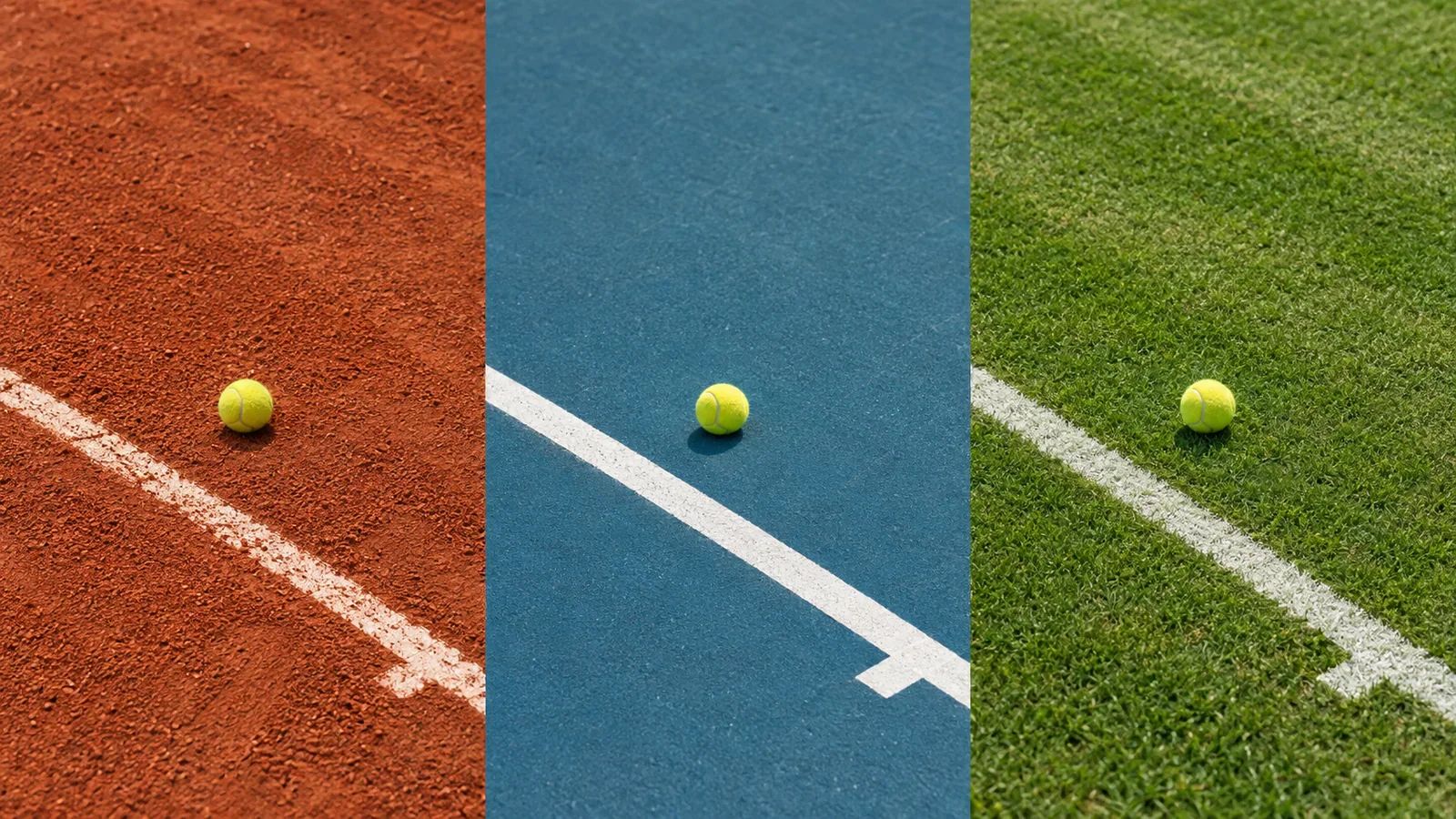
In Poland, tennis is often associated with the ground card and play outside in warmer months. however, cards are more than just ceglane: they are also played on hard surfaces, grass and coating. They change the rate of exchange and how the ball reverses from the ground. Specific conditions also depend on the given card, ball and weather, so it's worth spending a moment to recognize them before the game.
When you're ready to play, find a tennis court near you on OpenTennis.
Crop, that is milk.
The bulk usually slows the ball and gives it a higher cozyle than many hard cards. The longer time to get to the ball will help build changes and change directions. Topspin rotation can make the ball jumping up after replay. On the bulk you can also exercise slide if it is part of your game and you know the surface.
The conditions on the ground cortex change with the weather and the state of the ground. In a wet day the cortex can behave differently than in dry, and after the falls you need to pay attention to its state. Roland Garros is the Grand Slam tournament played on the flour; with that surface Rafael Nadal is associated.
Short hard
The hard cards have a foundation, among other things, from acrylic, asphalt or concrete, and their pace and height of the cows can vary. They often give less time than butter, so they are useful for quick preparation to hit and good return. On such cards they play among other Australian Open; Novak Djoković and Roger Federer are examples of players who have made a lot of success on them.
Don't automatically move the slide from the powder to a hard floor. The way of movement fits the surface you know, and the conditions of a specific court.
Wallpaper
The carpet is a surface with a cover, whose properties depend on the used material. Some cards give low, fast coat, others behave slowly. So it's worth checking exactly what you play, instead of assuming that every carpet reflects the ball the same. With a short exchange and low coat helpful can be a quick response, certain service and game at the grid.
Grass
Natural grass often gives a fast, low and less predictable cottage. The ball can reflect differently in the places where the surface is consumed and the wet grass is slides. This requires good reflex and quick preparation of the rocket. Serve-and-volley, i.e. service and reach to the grass, is associated with the game on the grass. Wimbledon is the Grand Slam tournament played on the natural grass. Cards with artificial grass have their own characteristics and do not need to behave as the natural grass.
How to choose a card for yourself?
There’s no surface that suits everyone in advance. If you like longer exchanges, check the ground cards; if you prefer a faster game, test the hard cards, roof or grass. Pay attention to the height of the cage, time to prepare and how freely you move on the ground. After a few games you’ll know more than after the description of the surface itself.