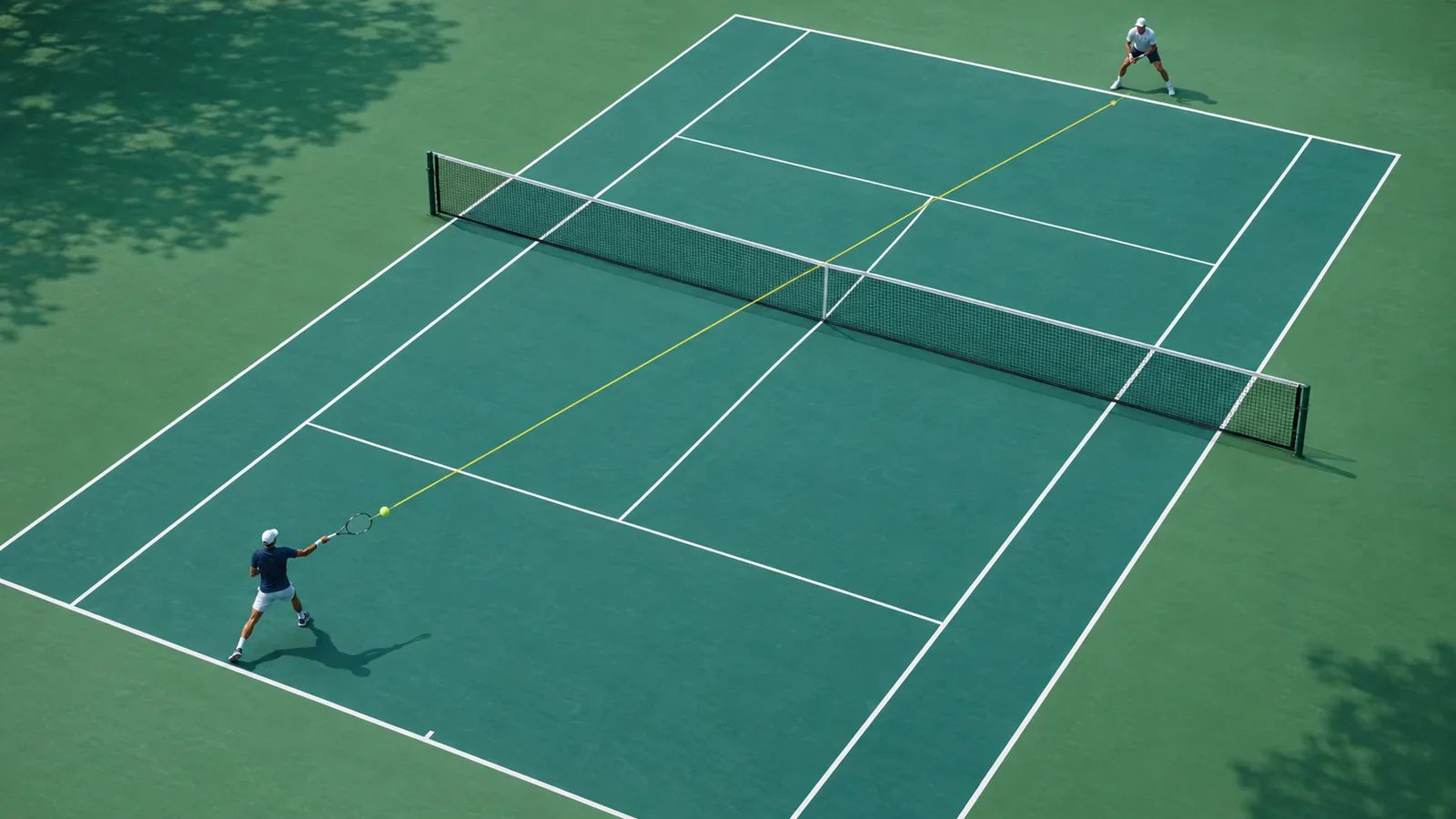
Playing a left-hander can feel unfamiliar at first. The strokes are the same, but the ball arrives from different angles, and the spin often sends it in a direction you see less often. That can shape a match, especially early on.
How handedness changes the court
A right-handed player's forehand is usually on the right side of their body; a left-hander's is on the left. Their backhands and serve angles are mirrored, too. As a result, a cross-court exchange that often sends a right-hander's forehand into an opponent's backhand may send a left-hander's forehand to the other side.
There is no automatic power advantage in either hand. A player's technique, movement and preferred patterns matter more. But a left-hander's serve can create angles that a right-handed opponent may not see as often, while the left-hander has to solve the same problem when facing a right-handed server.
Why a left-hander can feel difficult to read
Most players face right-handers more often, so a left-handed serve or forehand may take a few games to adjust to. The surprise is usually about direction and spin, not a special rule or an unbeatable shot. Watch the opponent's contact point, notice where their serve tends to go, and give yourself time to read the ball.
Simple match adjustments
- During the warm-up, hit cross-court and down the line to get used to the angles.
- On returns, start from a position that gives you room to cover the server's wide angle, then adjust as you learn their patterns.
- Use depth and height to the middle when you need time to reset the rally.
- Pay attention to the opponent's favourite serve and first shot rather than assuming every left-hander plays alike.
Handedness changes the geometry of a point. Footwork, shot selection and decision-making still determine what a player does with it.