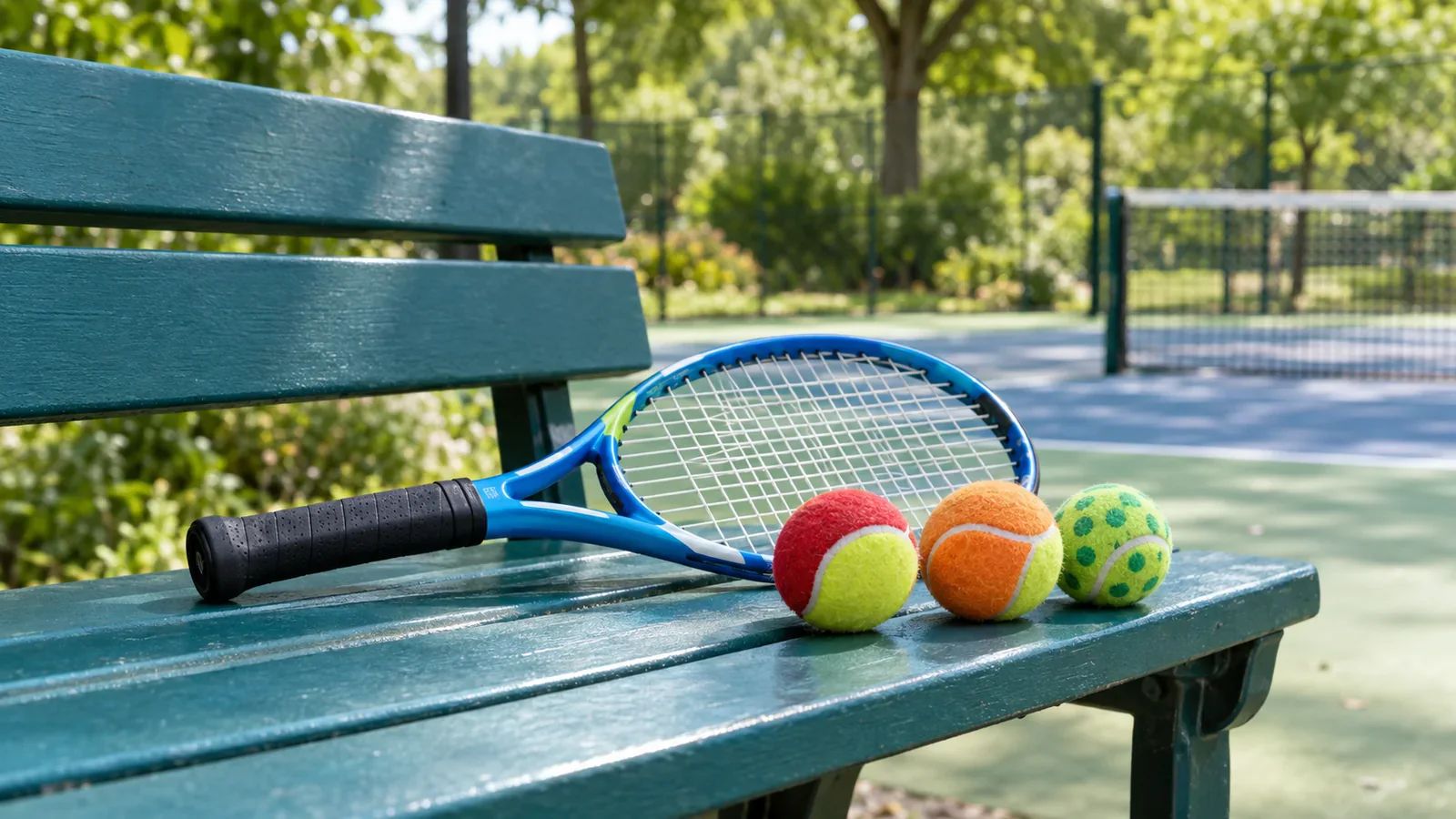
Children don't need a full set of equipment to try tennis. Start with a lesson or a court session using borrowed gear, then choose a ball and racket that let your child swing and make contact comfortably. A coach can help you match the equipment to the class and court.
Why start with a slower ball?
Junior programmes often use red, orange and green balls before moving to the standard yellow ball. These balls travel and bounce differently, giving children more time to get into position on a smaller court. The stages are commonly linked to age and ability, but the right one depends on the child and the programme. Ask the coach which ball the group uses.
Choose a racket they can manage
Junior rackets come in different lengths and weights. Height can help narrow the options, but it doesn't tell the whole story. Let your child hold a few rackets and try a practice swing. They should be able to move the racket without dragging the head or needing to lift their shoulder to keep it up between shots. If you're unsure, ask the coach to check the fit before buying.
A racket that's too long or heavy can be awkward to swing; one that's too short may not suit a child who has grown. Recheck the fit as your child grows rather than buying a larger frame well in advance.
Make practice playful
Keep early practice short and simple. Try tossing a slow ball for your child to hit, then swap roles. You can rally together inside the service boxes or aim for a cone or a court marking where permitted. Count how many hits you keep going, and stop while the game is still fun.
For advice on choosing a beginner class and preparing for the first session, read what to expect at your child's first tennis lesson.