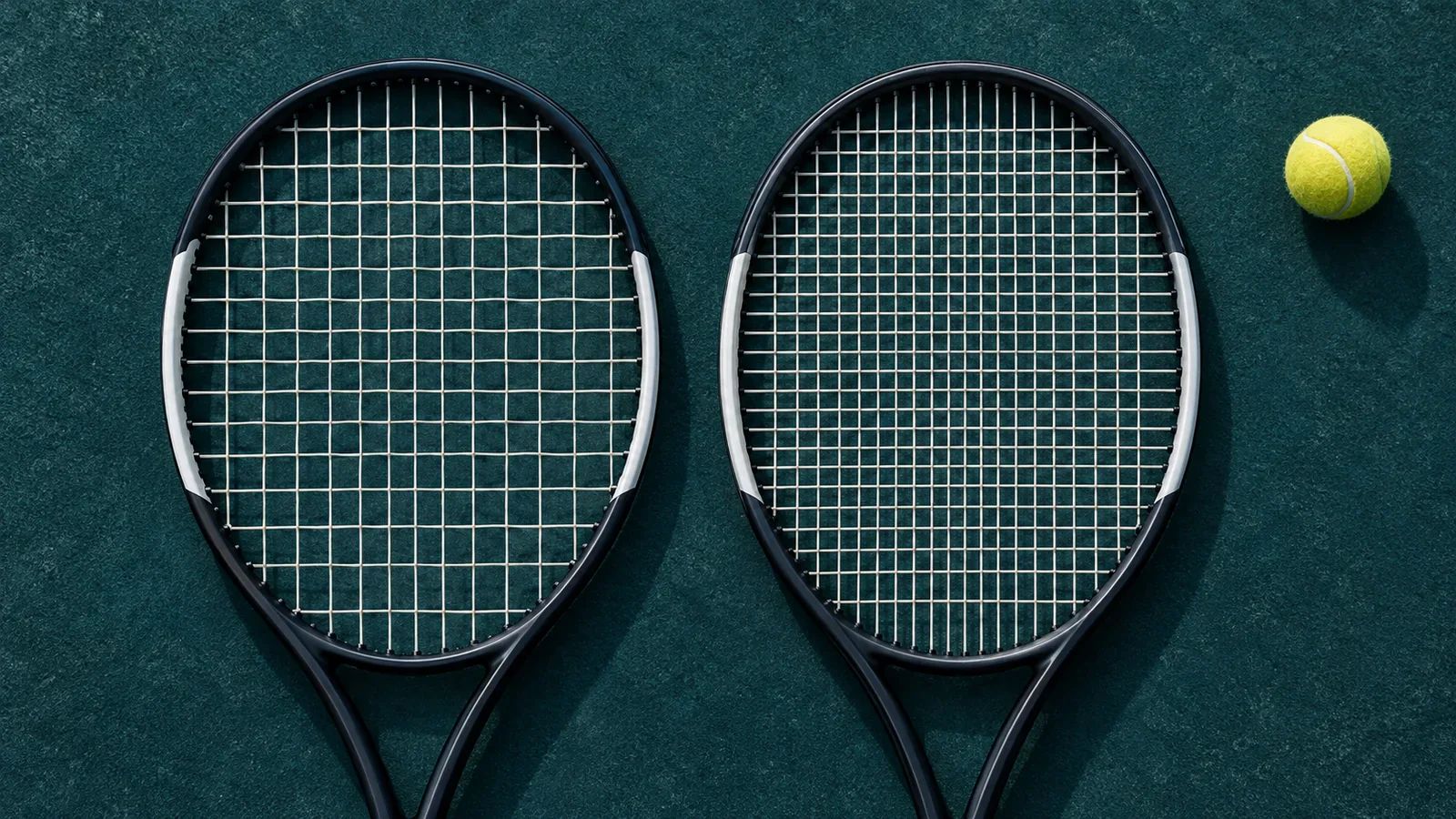
A 16x19 racket has 16 main strings running lengthwise and 19 cross strings. An 18x20 has 18 mains and 20 crosses. With similar head sizes, the 16x19 pattern is usually more open, with wider gaps between strings.
How string patterns can feel
An open pattern often lets the ball leave the strings on a higher trajectory, which some players like when they hit with topspin. The strings may also move more at contact. A denser pattern can feel more controlled and send the ball on a lower trajectory for some players. These are tendencies, not guarantees: technique, string type, tension, head size and the spacing of the strings all affect the result.
String durability varies with the player and setup. If you break strings often, compare the same type of string and tension in both frames and ask a stringer whether another setup might suit your playing style.
How to compare rackets
Start with a grip you can hold without squeezing and a weight you can swing comfortably. If demo rackets are available, try them in the same session with the same balls. Hit your usual forehands and backhands, then test returns and serves. Ask how each racket is strung so you're not mistaking a difference in tension or string for a difference in pattern.
For more on grip size, weight and court testing, read our guide to choosing your first tennis racket.